
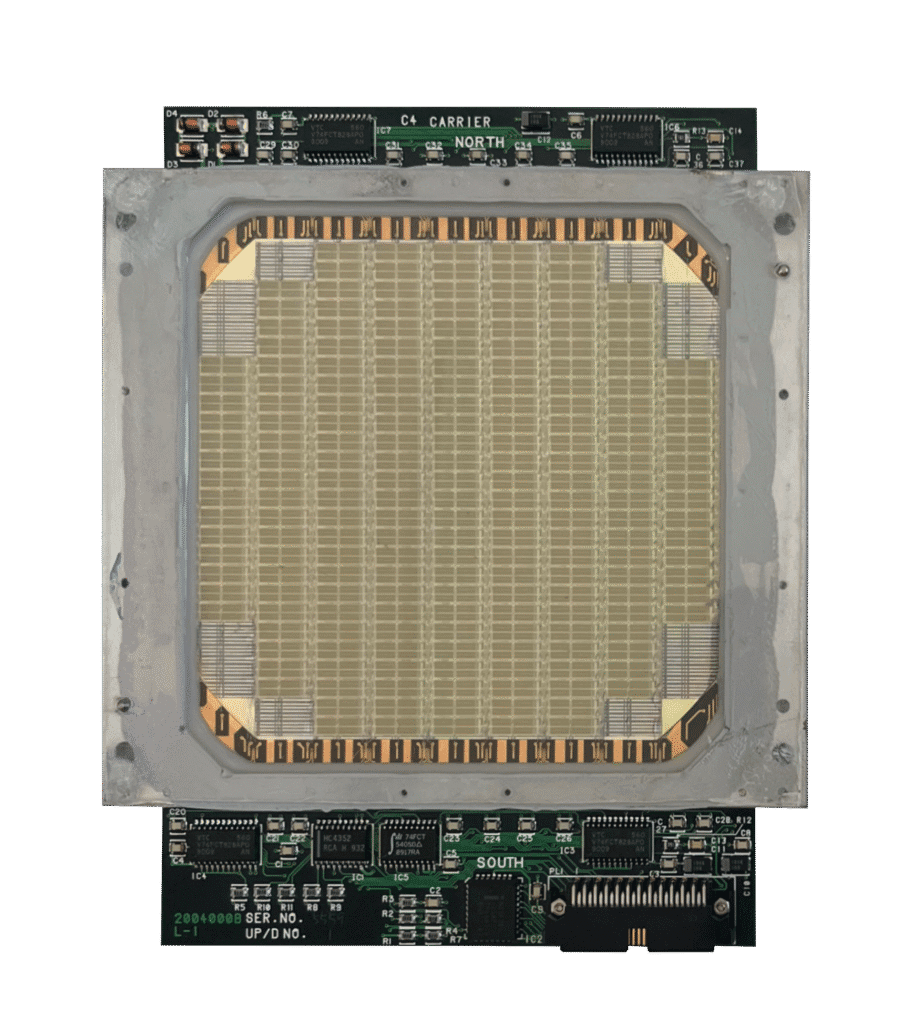
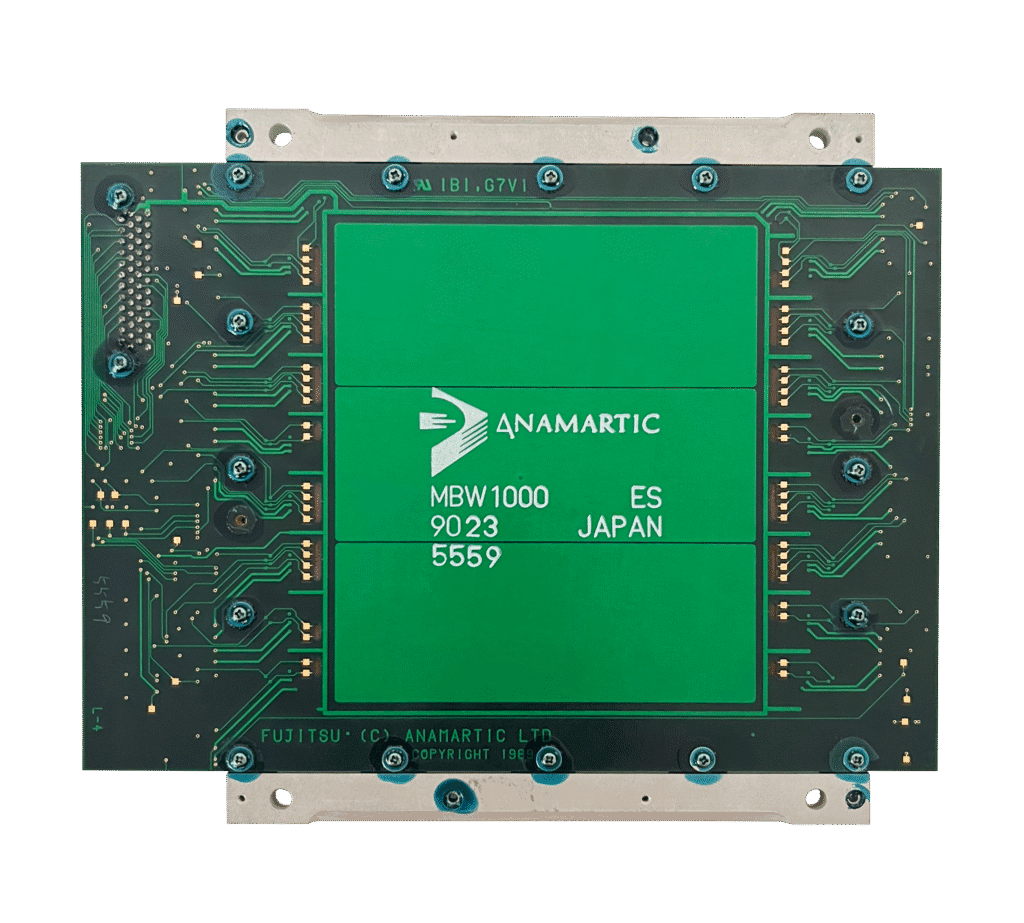
Marketed to businesses running large-scale transaction systems, it was intended as a faster alternative to magnetic disk drives and offered access speeds up to 200 times quicker than conventional hard disks. The Wafer Stack won industry awards but was launched just as falling RAM prices and difficulties securing wafer supply made the approach commercially unviable.
By the early 1990s Anamartic was inactive, but its pioneering approach foreshadowed the solid-state drives (SSDs) now standard in laptops, tablets and phones. Modern SSDs use flash memory rather than wafer-scale integration, but the goal remains the same: faster, more reliable storage without moving parts.
 Image: Featured in the cover story “Wafer-Scale Memories”, published in the Electronic Design, October 1989